
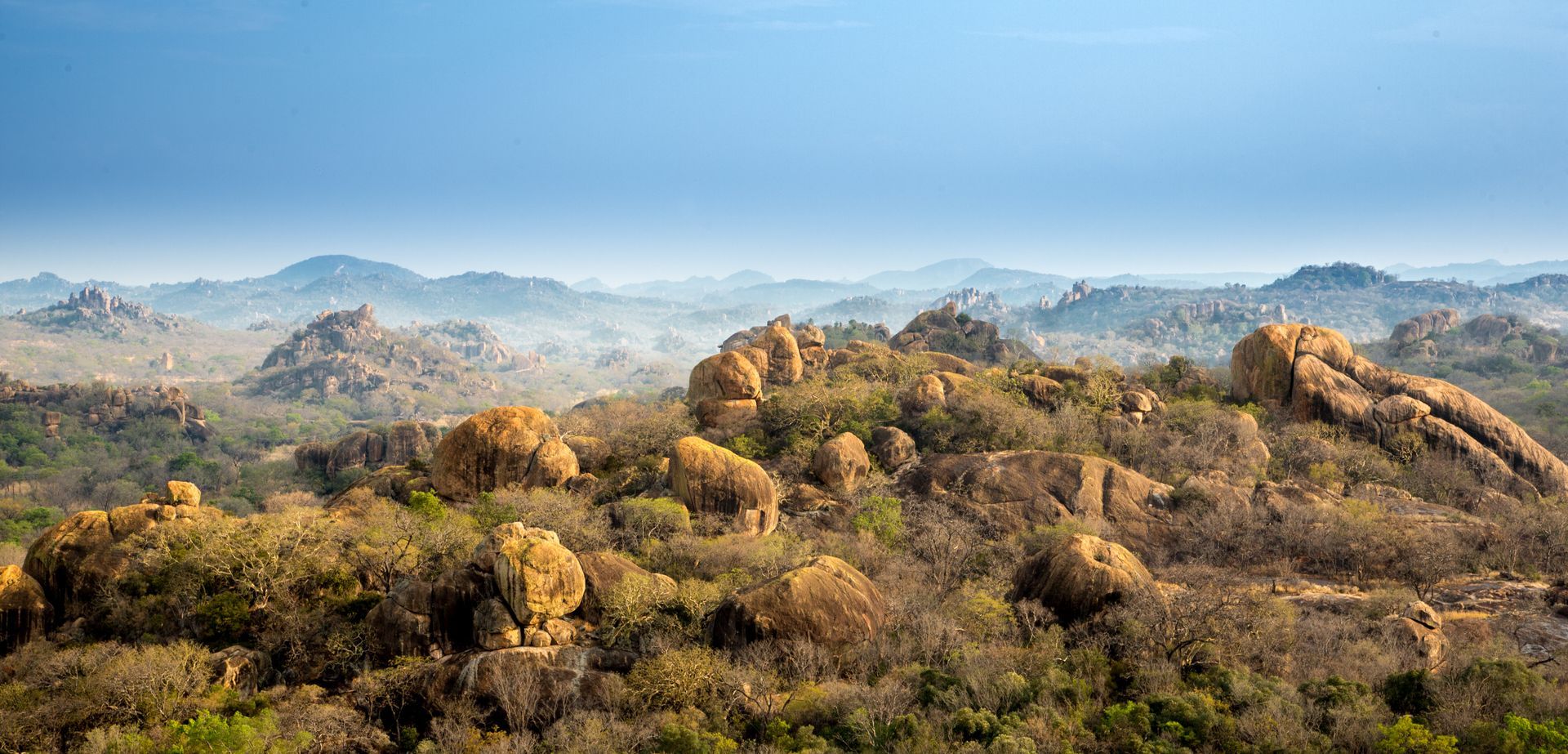

FARMHOUSE FRIDAY
Looking for somewhere close by to spend the day with the family?
At Farmhouse we allow people to visit for the day.
What you get is the opportunity to self drive around our property, find the perfect spot for a picnic or if you have planned and booked a Braai at one of our sites.
It gives you a chance to see some wildlife and breath the fresh clean are of the Matobo hills.
Be sure to call ahead though, there are times we are either closed for a private function or we are full at the picnic/camping sites.

THOUGHT PROVOKING THURSDAY
The merit of all things lies in their difficulty.
- Alexandre Dumas
What's your thought on this quote?
Let us know in the comments below.

WEDNESDAY WALK ABOUT
Often when we are on foot, we notice more of natures wonders than we would have if we were driving around.
Sometimes we don't need to go far to see the amazing little wonders.
Sometimes they are found in our gardens.

TRAIL CAM TUESDAY
The herds of impala are looking quite healthy at this point.
Impalas are agile African antelopes known for their incredible leaping abilities, social behavior, and striking reddish-brown coats.
Impalas are exceptional athletes, capable of leaping up to 3 meters (10 feet) high and covering distances of 10 meters (33 feet) in a single bound. They can run at speeds of up to 80 km/h (50 mph), often zigzagging to evade predators like lions, cheetahs, and leopards.
Impalas are highly social, forming herds that can include hundreds of individuals. Herds provide protection against predators, and males establish territories during the breeding season, engaging in high leaps and vigorous fights to assert dominance. They communicate using vocalizations such as snorts and alarm calls to alert the group to danger.

MEMORABLE MONDAYS
Seeing this incredible bull while out on the property definitely makes the Monday Memorable!
The greater kudu's horns can grow up to 187.64 cm long, with a typical length of 120 cm. They are known for their spiral shape and can reach up to 6 feet in length.
A male kudu can weigh up to 315 kg, making it one of the largest antelopes.
The greater kudu stands up to 1.6 meters tall at the shoulder.
Kudu bulls are known for their leaping prowess and are often found in bachelor groups. They are highly alert and can produce a hoarse alarm bark when sensing danger.
They prefer rocky bush terrain and moderately wooded savanna, where they can hide from predators and access food.

SUNNY SUN-DAY
Watch more sunrises instead of TV shows

SOMETHING FOR A SATURDAY
These male Zebra tend to visit the campsite a lot.
There is always something to see from up there!

FARMHOUSE FRIDAY
When you book to stay with us at the lodge or campsite we can arrange for you to do a Rhino Tracking activity. This is done with Professional Guides who are among the most qualified in Africa.
Zimbabwean professional guides undergo a rigorous training process that includes a minimum of four years of apprenticeship under experienced guides. This hands-on experience is crucial for developing the necessary skills and knowledge to guide guests safely and professionally in the wild.
Our Zimbabwean guides are not only skilled in guiding but also deeply committed to conservation. They are trained to understand animal behavior and life cycles, ensuring sustainable and ethical guiding practices.
Zimbabwean professional guides are recognized as the highest qualified in Africa and among the highest qualified worldwide. Their training and certification program is considered the most robust in Africa.
It is important to know, that Rhino are classed as dangerous game, no matter how habituation we think they are, they are still dangerous game. This being said, Rhino tracking does have an age limit for children. often on a case-by-case booking, and at the Professional guides discretion.

THOUGHT PROVOKING THURSDAY
The darker the night, the brighter the stars
- Fyodor Dostoyevsky

WEDNESDAY WALK ABOUT
Often when we are on foot, we notice more of natures wonders than we would have if we were driving around.
This little Black Crowned Tchagra was giving us a little show!

TRAIL CAM TUESDAY
This vervet monkey looks like he is checking out the joint properly before proceeding!
Communication and Intelligence
These monkeys are known for their complex communication system, including up to 30 different alarm calls for predators like leopards, eagles, pythons, and baboons. Each call triggers a specific response, such as fleeing to trees or looking up for aerial threats. Infants learn these calls by observation, without explicit teaching, demonstrating their intelligence and social learning abilities.
Vervet monkeys are highly social, living in groups called troops that can range from 10 to 70 individuals. Each troop has a distinct hierarchy, with separate dominance structures for males and females. Females usually stay in their natal groups, while males may move between troops to socialize and mate. Grooming is an important social activity, helping to strengthen bonds and reduce stress.

MEMORABLE MONDAYS
Remembering back to when we found this incredible artifact around the area.
Still hidden in its original placement so many years later.

SUNNY SUN-DAY
“Nothing can dim the light which shines from within.”
– Maya Angelou

SOMETHING FOR A SATURDAY
This little herald came by the lodge some time back.
Here you can see it drinking some water that is on the rock.

FARMHOUSE FRIDAY
As accommodated guests, you are able to hike up Mabazvi.
The kopjie (hill) behind the lodge.
It takes a little work to get to the top, but the pay off is so much greater than the effort!
View more